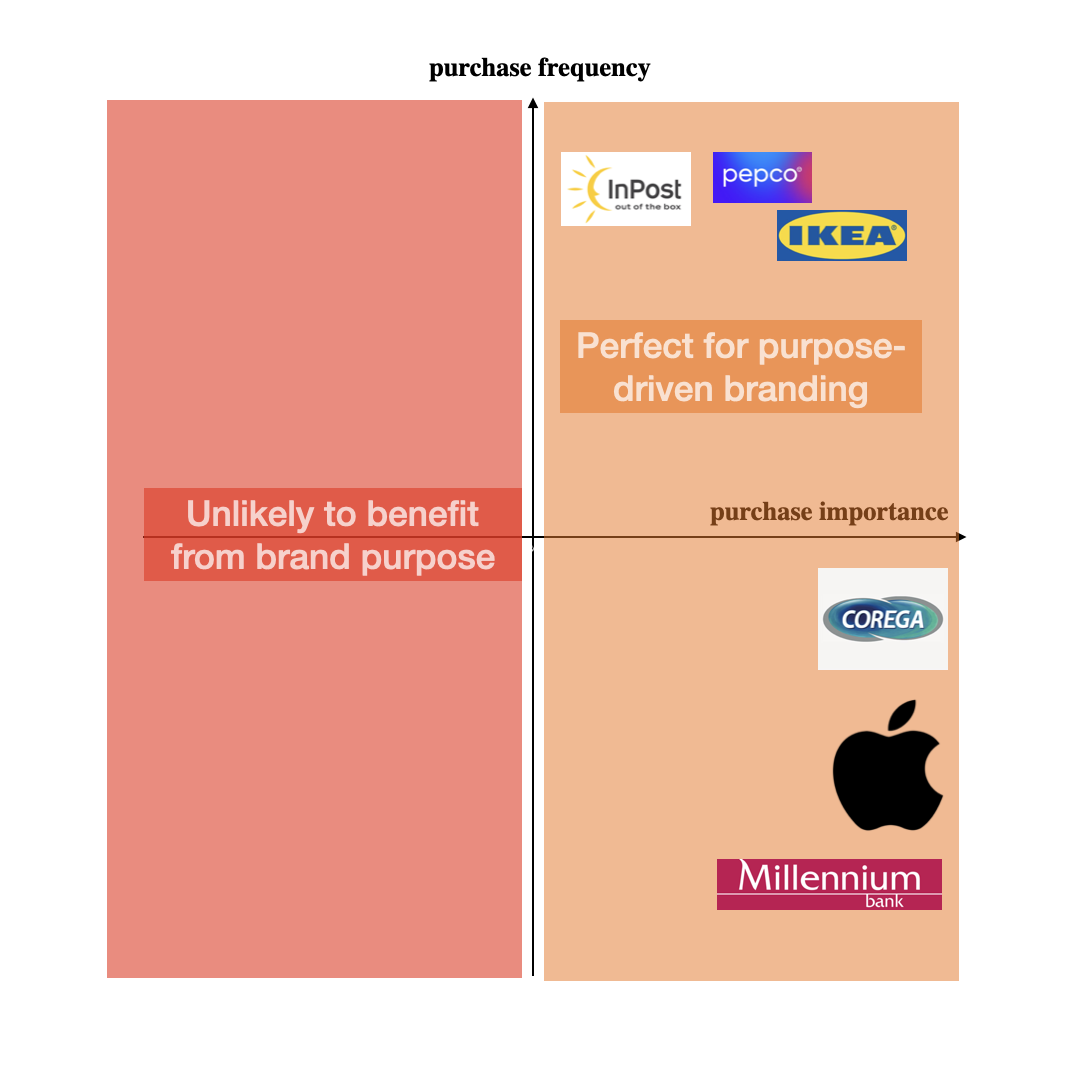
To answer this question I use a simple matrix based on two dimensions: purchase frequency and purchase importance.
Brands in the top-right quadrant, where purchases are both frequent and important, are ideal candidates for strong, relevant brand purpose. This includes brands like IKEA, InPost, and PEPCO, where I once created a campaign focused on women’s talents: you have dreams to realize, and we exist to give you the right tools through our product offer. Strong sales results confirmed this approach.
The bottom-right quadrant includes brands with lower purchase frequency but high importance, like banks, Apple, or Corega. For Corega, I co-created the “9 Million Reasons” campaign, fighting the stigma around dentures. The brand purpose was empowerment: helping people overcome fear and enjoy life fully. The campaign won Gold EFFIE in Poland and Bronze EFFIE Europe.
But if your brand sits in the left side of the matrix, where purchase importance is low, with low or even high frequency, investing in brand purpose often misses the point. Because the real outcome of strong brand purpose is loyalty and recommendation. For that, you need a high purchase importance.

No responses yet